The Sochi Trilateral Statement: Who has gained what? (by Yeghia Tashjian)

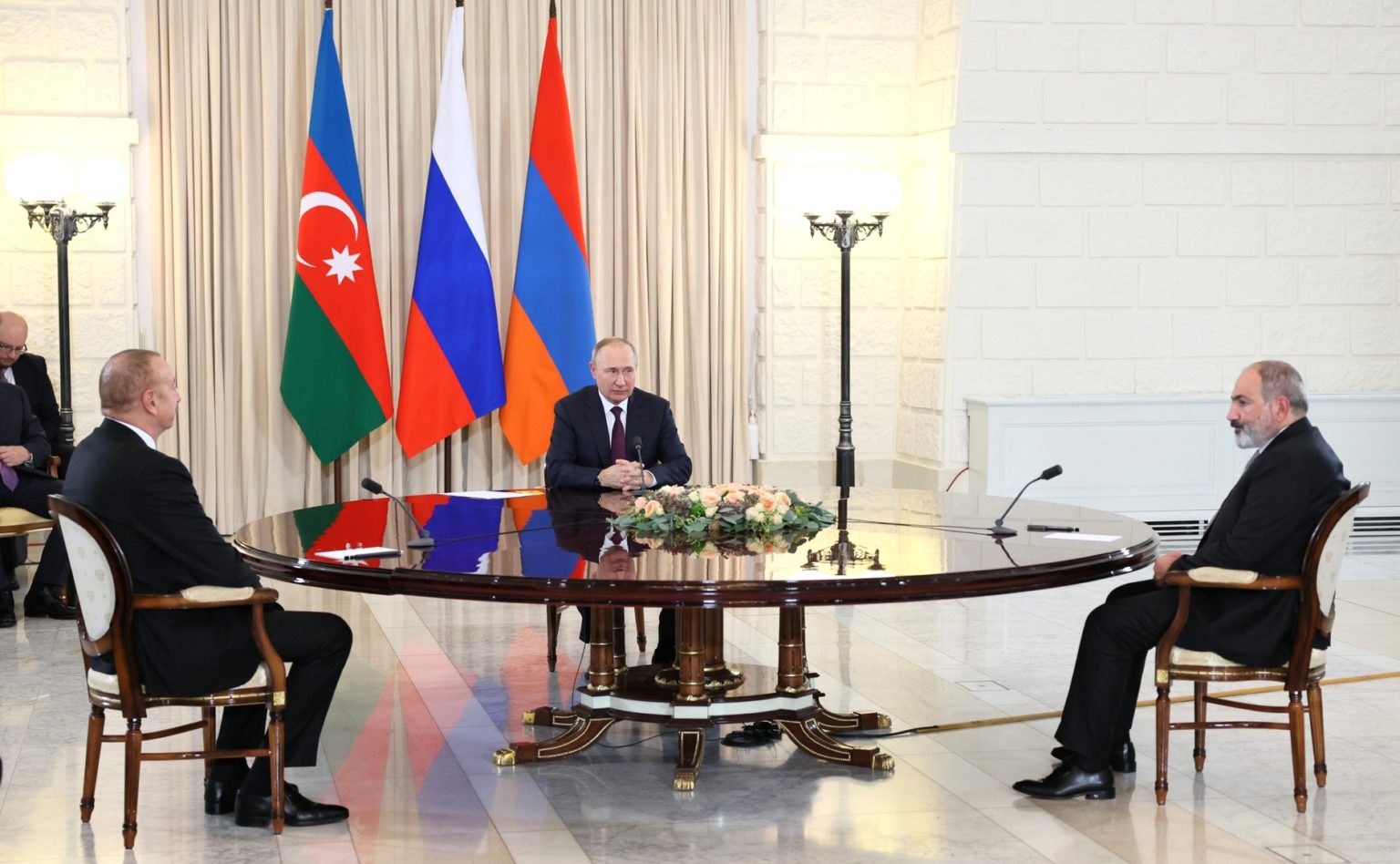
Azerbaijani President Ilham Aliyev, Russian President Vladimir Putin and Armenian PM Nikol Pashinyan meet in Sochi (Kremlin, October 31) On October 25, 2022, Russia’s Foreign Ministry accused the West of pressuring Armenia to cut its traditionally close ties with Moscow in an effort to squeeze
How do Iranian scholars perceive developments in the South Caucasus? (by Yeghia Tashjian)

A survey was recently conducted by the Tehran International Studies and Research Institute (TISRI) to study international security priorities and Iran’s foreign policy. The survey was conducted among 384 academic scholars in different Iranian universities (Tehran, Allameh Tabataba’i, Tabriz, Guilan, Shiraz and Razi of Kermanshah)

Armenia–India Relations: From Politics to Arms Trade (by Yeghia Tashjian)

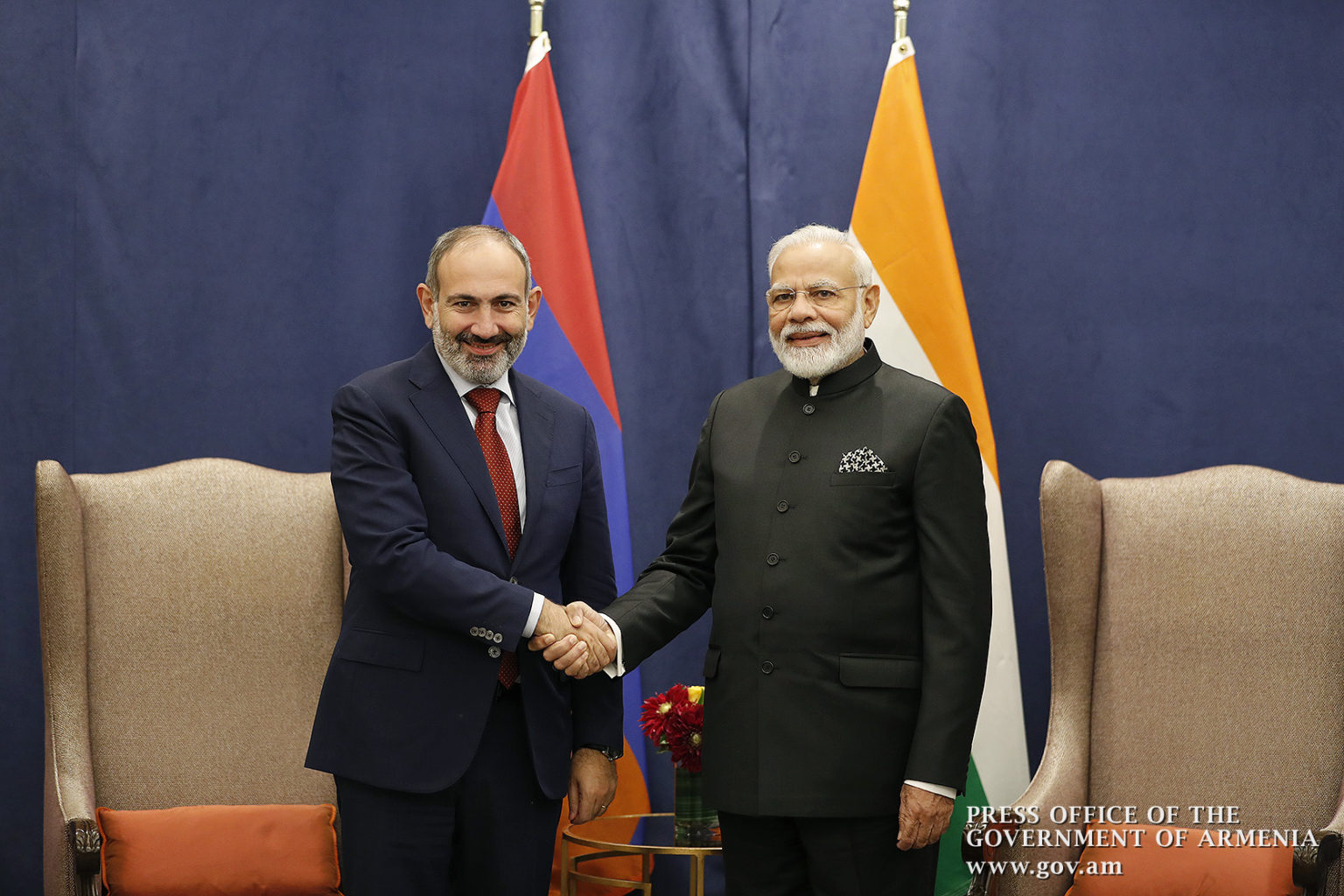
Prime Minister Nikol Pashinyan meets with India’s Prime Minister Narendra Modi on the margins of his working visit to New York, September 26, 2019 During my academic visit to New Delhi in February 2020, I met with Indian politicians and scholars and discussed

Why is Baku waging a “war of words” against Tehran? (by Yeghia Tashjian)

During a meeting with Russian President Vladimir Putin and Turkish President Recep Tayyip Erdogan in Tehran on July 19, the Iranian Supreme Leader Ali Khamenei warned against blocking the Armenian-Iranian border, stating, “If there is an effort to block the border between Iran and

The Impact of the Crisis in Ukraine on the Regional Order in the Middle East (by Yeghia Tashjian)

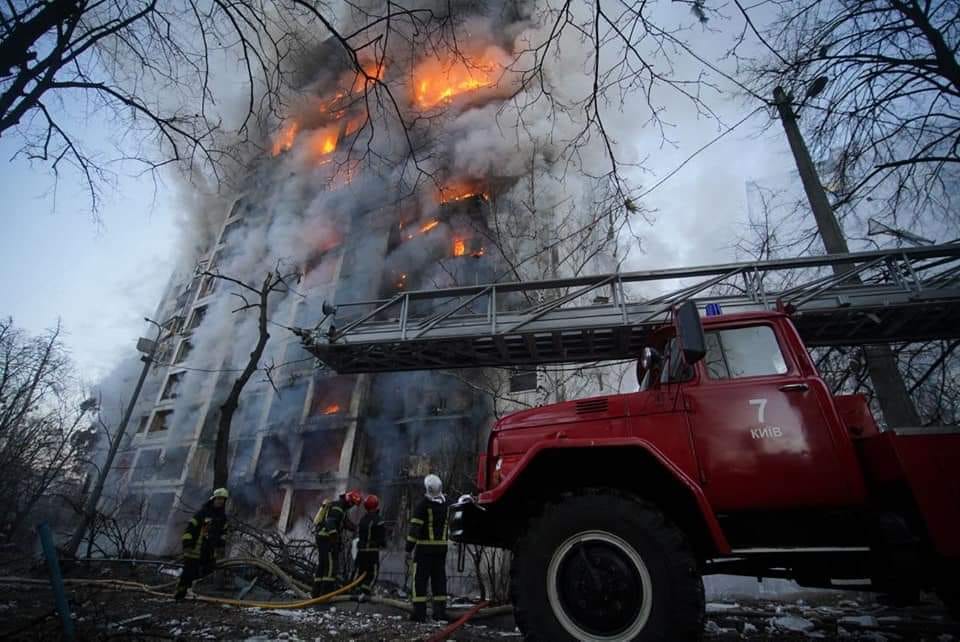
Background of the Current Russian-Ukrainian Conflict On February 21, 2022, Russian President Vladimir Putin officially recognized the Donetsk People’s Republic and the Luhansk People’s Republic, two self-proclaimed states controlled by pro-Russian groups in Donbas, Eastern Ukraine. The next day, Russia’s Federation Council unanimously

Reflection on the “Armenia-Iran: Historical Past and Present” International Conference (by Yeghia Tashjian)

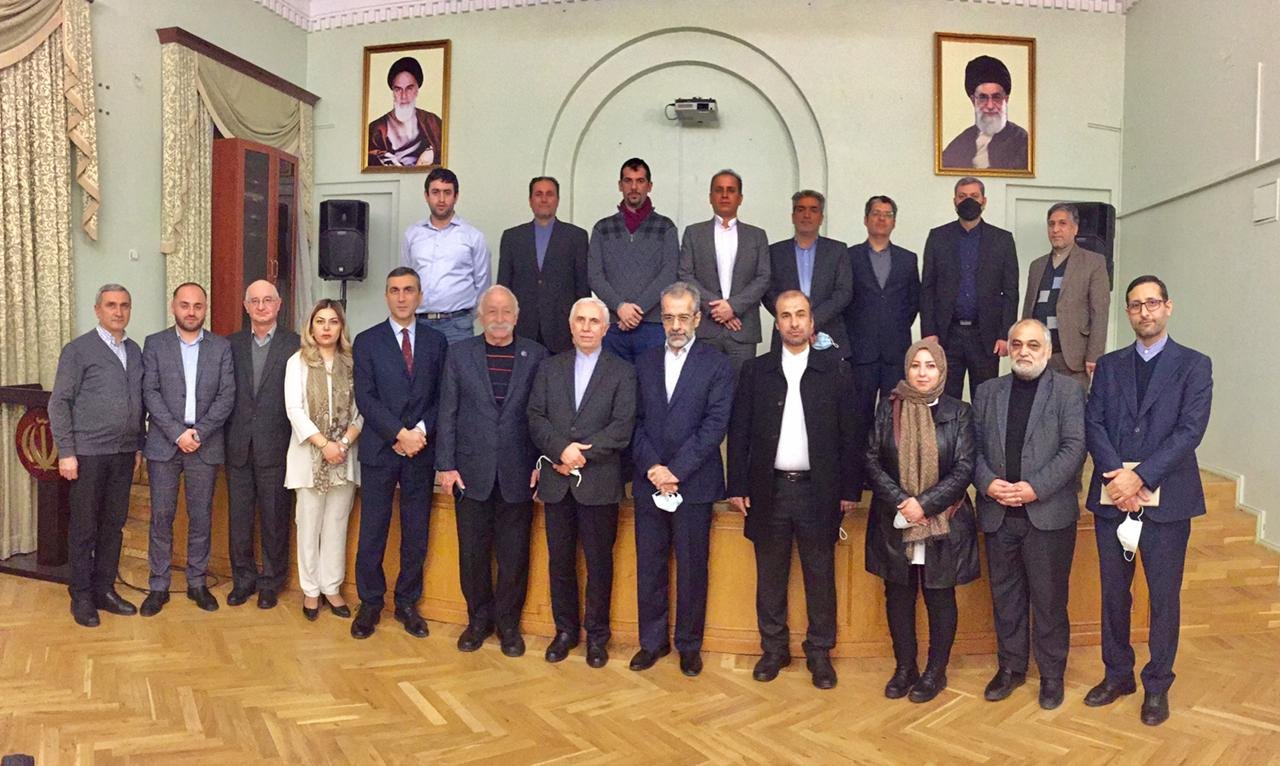
The Iranian Studies Department of the Oriental Studies of the Armenian National Academy of Sciences, together with the Iranian Cultural Center of the Embassy of Islamic Republic of Iran at Yerevan and Yerevan State University, organized a two-day international conference from February 9-10,

The Regional Implications of the Iranian President’s Visit to Moscow (by Yeghia Tashjian)

On January 19, 2022, Iranian President Dr. Ibrahim Raisi traveled to Moscow and met his Russian counterpart Vladimir Putin in an effort to improve bilateral ties between both countries. The leaders discussed regional and international issues, among them the negotiations around Iran’s nuclear

Have the events in Kazakhstan exposed the limits of Turkey’s regional aspirations in Central Asia? (by Yeghia Tashjian)

In February 2021, I wrote an article “Turkey’s Pivot in Central Asia: A Calculated Risk?” and asked to what extent can Turkey push its pan-Turkic aspirations in Central Asia? If Turkey’s economic and energy relations in Central Asia continue to deepen, will it

ARF’s Position on the Armenian-Turkish “Normalization” Process (by Yeghia Tashjian)

Often, there are misconceptions or misrepresentations of the Armenian Revolutionary Federation’s (ARF) official position on Armenian-Turkish relations. Western journalists, analysts and even Armenian liberals have labeled the party as “anti-peace,” “aggressive nationalist” and have accused it of acting against any kind of dialogue

Book Review | Clash of Histories in the South Caucasus

Clash of Histories in the South Caucasus: Redrawing the map of Azerbaijan, Armenia and Iran By Rouben Galichian Bennet & Bloom, 2012 232 pp. It is widely acknowledged that history is often manipulated and revised by authoritarian states. History textbooks have been used