Pashinyan’s Foreign Policy Challenges (By Yeghia Tashjian)

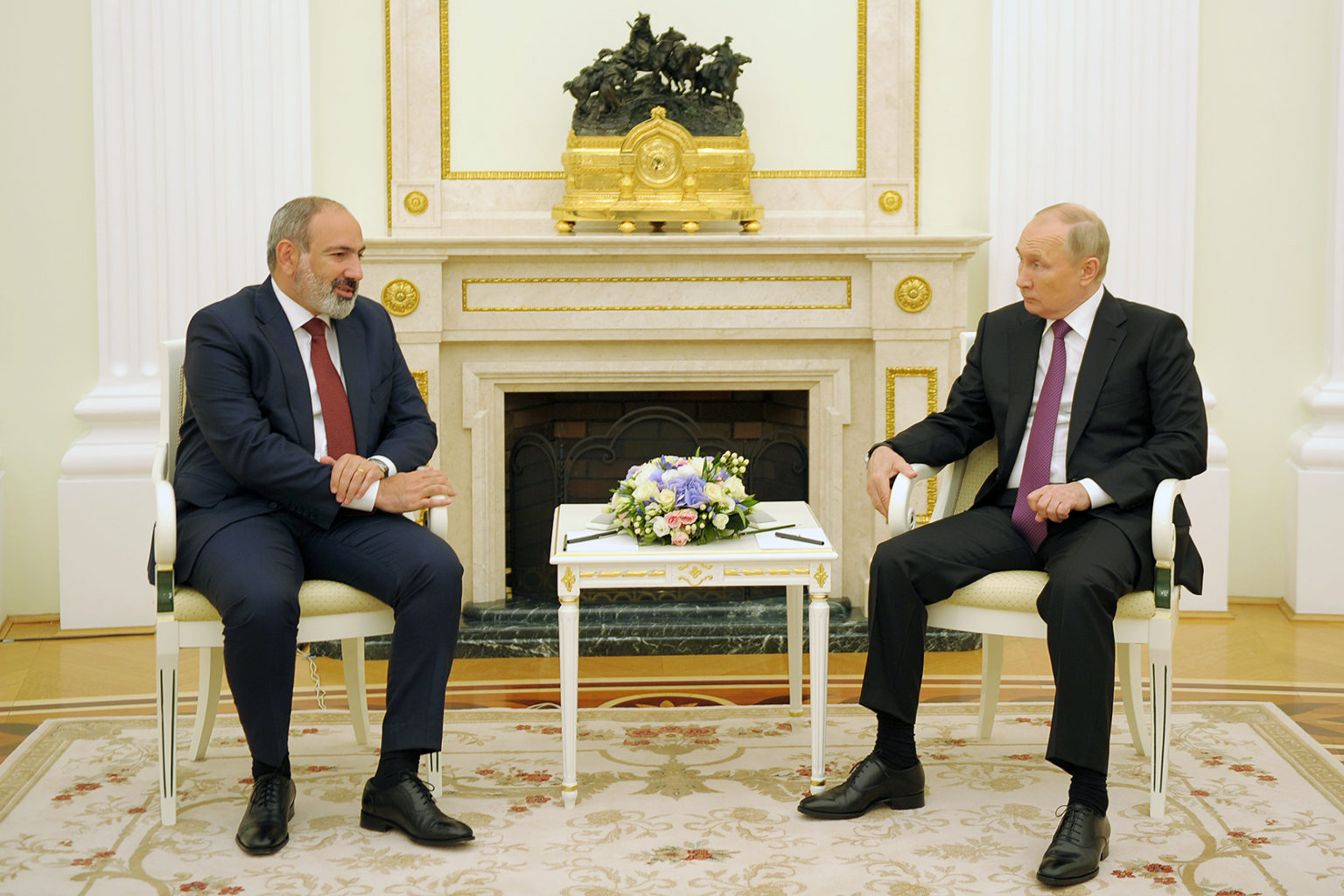
Caretaker PM Nikol Pashinyan and his party’s euphoria from election victory will soon disappear, since for them, the post-election period will be full of foreign policy challenges linked to the post-war regional dynamics in the South Caucasus. These challenges range from Armenia’s balancing
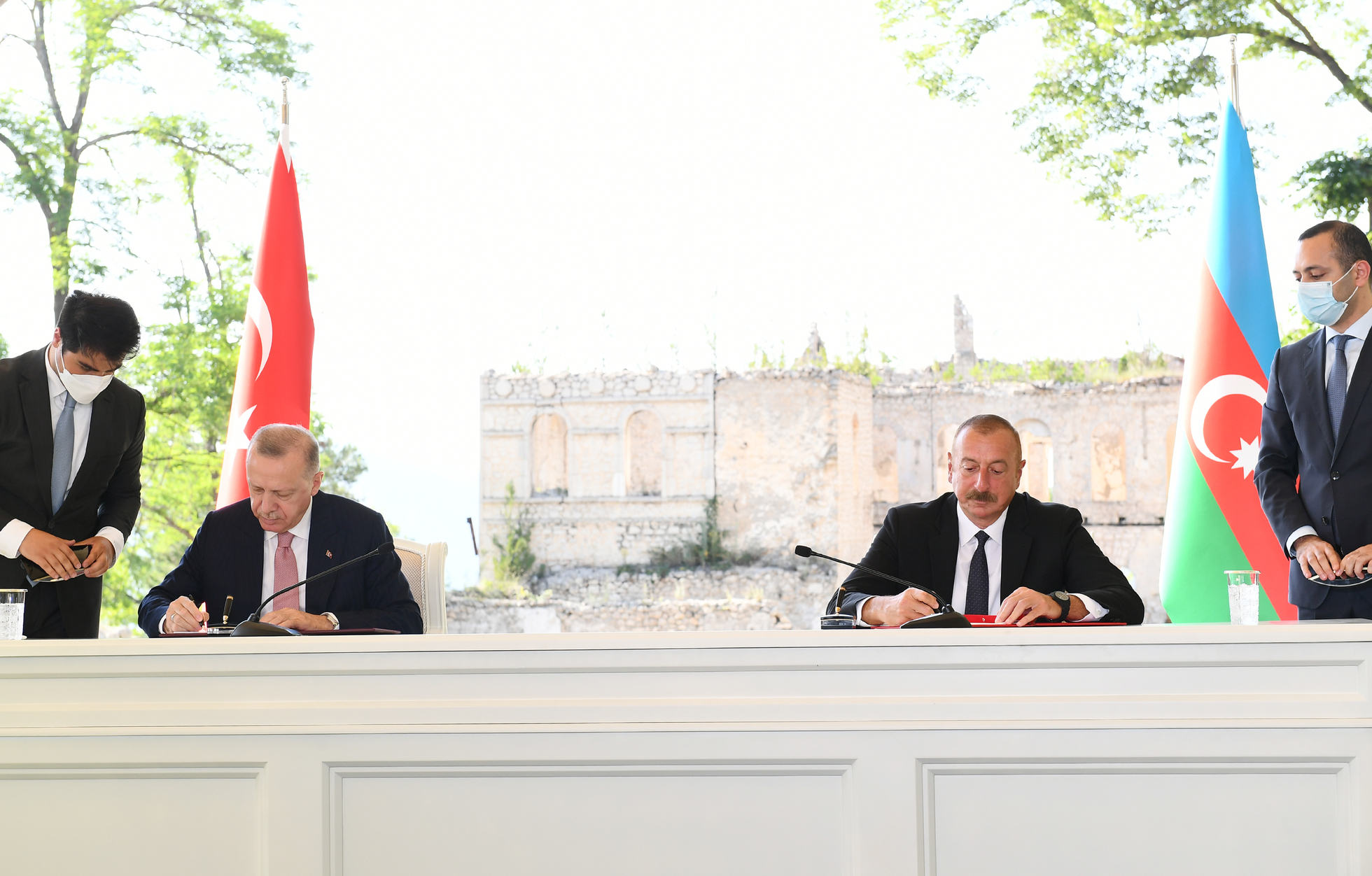

“Shushi Declaration” and its Implications on the South Caucasus and Beyond (By Yeghia Tashjian)

On June 15, 2021, during his visit to occupied Shushi, Turkish President Recep Tayyip Erdogan signed the Shushi Declaration with his Azerbaijani counterpart Ilham Aliyev to cement “allied relations” between the two countries. The declaration consists of many important points including mutual defense guarantees and

The “Armenia Alliance” Electoral Platform and the Parliamentary Elections (By Yeghia Tashjian)

The political coalition “Hayastan Dashinq” (hereinafter “Armenia Alliance”) held its founding ceremony in Yerevan, Armenia on May 9, 2021 with the signing of a memorandum of understanding between Armenia’s former President Robert Kocharyan, Ishkhan Saghatelyan on behalf of the Armenian Revolutionary Federation-Dashnaktsutyun (ARF-D)

Syunik and the Geo-Economic Future of the South Caucasus (By Yeghia Tashjian)

The recent Azerbaijani border line encroachment towards Syunik should not surprise us at all. Azerbaijani President Ilham Aliyev’s threats after the war over Artsakh to forcibly open a “corridor” connecting Azerbaijan to its Nakhichevan exclave via Syunik, the role of Azerbaijani media in mobilizing its people for

Armenia and India’s Vision of “North-South Corridor”: A Strategy or a “Pipe Dream”? (by Yeghia Tashjian)

On March 8, the Indian Ambassador to Iran Gaddam Dharmendra announced that India is planning on connecting the Chabahar port (a seaport in southeast Iran, heavily invested in by India) and the Indian Ocean with Eurasia and Helsinki through the territory of Armenia, creating an International

Aliyev, once again, threatens Armenia with war (By Yeghia Tashjian)

“NEVER, WITHOUT SYUNIK, WITHOUT THIS STRONG GEOGRAPHIC BACKBONE OF ARMENIA, OUR ENTIRE HOMELAND CANNOT EXIST.” — KAREKIN NJTEH Azerbaijani President Ilham Aliyev is taking advantage of the domestic instability in Yerevan and once again using a threatening tone against Armenia. On the 6th

Book Review: Ethnicity, Nationalism and Conflict in the South Caucasus (Yeghia Tashjian)

In his book “Ethnicity, Nationalism, and Conflict in the South Caucasus: Nagorno-Karabakh and the Legacy of Soviet Nationalities Policy” (2012), Dr. Ohannes Geukjian analyzes how ethnicity and nationalism became a catalytic cause of the Nagorno-Karabakh conflict and how they have affected Armenian-Azerbaijani relations

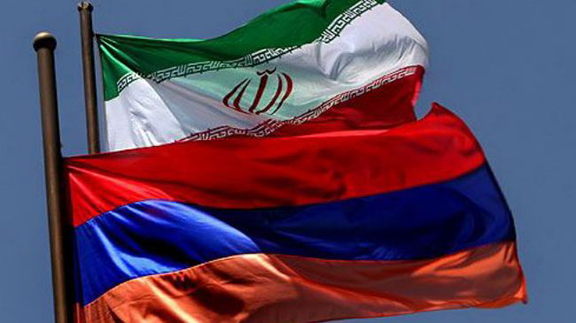
Iran and the Second Artsakh War: Has Tehran lost its leverage over the South Caucasus? (By Yeghia Tashjian)

Introduction When it comes to the South Caucasus, Iran is historically and geographically a crucial regional actor alongside Russia and Turkey. To assert its influence in the Nagorno-Karabakh/Artsakh conflict, Tehran had offered to mediate between Armenia and Azerbaijan on various occasions, but its

The Division of Trade Spoils over Armenia (By Yeghia Tashjian)

After the armistice of November 10, Russia gained significant strategic advantages in the South Caucasus. Russia did not just score a military victory by consolidating its military presence in the region, but it is also facilitating the construction of railways and trade networks.

How can Armenians overcome their national crisis? (By Yeghia Tashjian)

War adversely affects combatants and non-combatants alike, both physically and psychologically. Death, disability, illness and post-traumatic stress disorders (PTSD) are common consequences of wars, the horrors of which disrupt not just the life of the people but also the economy and state institutions.